


Thirty Years of Conserving and Promoting the Values of Hạ Long Bay as a World Natural Heritage Site
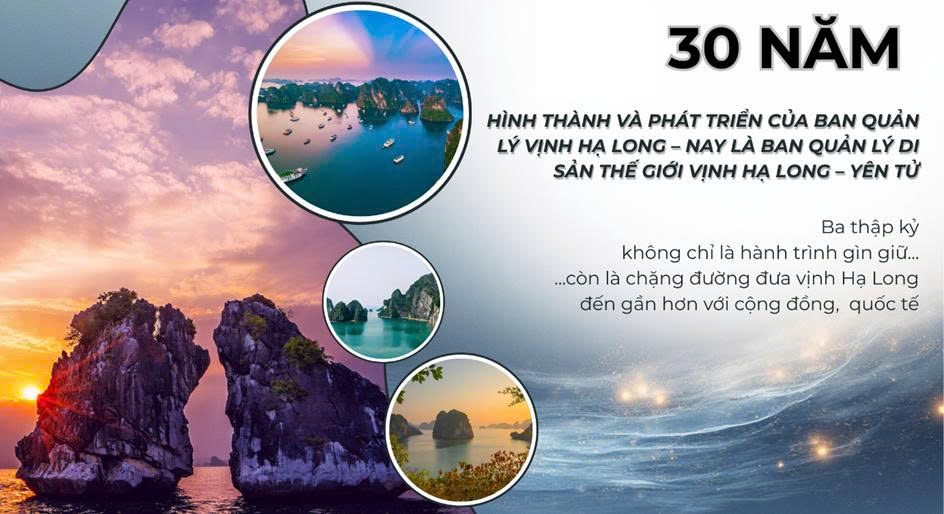
The year 2025 marks the 30th anniversary of the establishment and development of the Hạ Long Bay Management Board, now the Hạ Long Bay – Yên Tử World Heritage Management Board. For three decades, this has been a persistent and continuous process of innovation in vision and practice, together with the gradual standardisation of criteria in conservation, tourism management and environmental protection, in line with international standards. This period has represented not only a steadfast commitment to safeguarding one of humanity’s outstanding natural treasures, but also a sustained endeavour to bring the Outstanding Universal Value of Hạ Long Bay as a World Natural Heritage Site ever closer to local communities and to the international community.
From the First Steps…
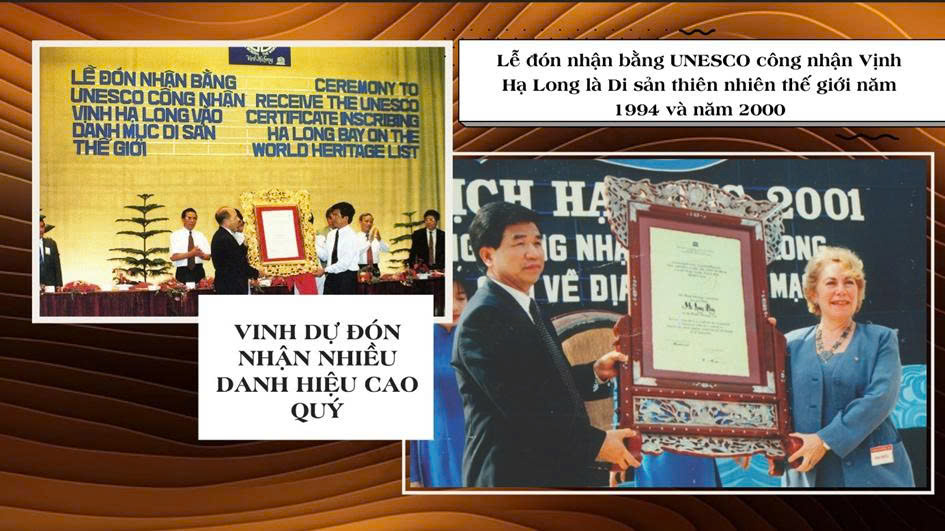
On 17 December 1994, Hạ Long Bay was officially inscribed on the UNESCO World Natural Heritage List. Along with the great pride this recognition brought, it also opened up new prospects for Quảng Ninh Province while simultaneously posing an imperative task: how to effectively manage, conserve and promote the values of Hạ Long Bay.
Arising from this requirement, on 9 December 1995, the People’s Committee of Quảng Ninh Province officially decided to establish the Hạ Long Bay Management Board, as the specialised body assisting the Provincial People’s Committee in state management of the conservation, exploitation and promotion of the values of Hạ Long Bay Heritage.
Established in the immediate context of Hạ Long Bay’s inscription as a World Natural Heritage Site, the Management Board was entrusted with the key responsibility of coordinating with relevant departments, sectors and local authorities to implement solutions for the protection and conservation of the Bay’s Outstanding Universal Value, in parallel with the sustainable utilisation and promotion of its potential and strengths. At the same time, it was tasked with developing a management model in full compliance with the requirements of the international conventions on heritage conservation and promotion, and with building the image of a responsible, friendly and professional World Heritage Site.
In its formative years, the Management Board was confronted with numerous challenges, while its human resources remained extremely limited, with only 12 officials and employees responsible for managing a vast area of more than 1,553 square kilometres, characterised by widely dispersed resources. At the same time, pressures arose from inadequately controlled tourism activities at the Heritage Site, together with an incomplete legal and regulatory framework.
Nevertheless, through strong determination and an innovative approach, the collective leadership and staff of the Management Board laid the essential foundations for the modern system of management, conservation and promotion of Heritage values as it exists today.
And the Achievements Attained
In order to tightly manage and effectively control socio-economic activities on the Bay, and to minimise negative impacts on the Heritage Site, the Hạ Long Bay Management Board proactively advised the Provincial People’s Committee on the promulgation of numerous mechanisms and policies, thereby promptly enhancing the effectiveness of state management. It also provided input to the Provincial Party Committee and the Provincial People’s Council in issuing thematic resolutions on the management, conservation and promotion of Hạ Long Bay, such as Resolution No. 09-NQ/TU of the Provincial Party Committee in 2001, Resolution No. 68/2018/NQ-HĐND of the Provincial People’s Council in 2012, the Detailed Master Plan for the Conservation and Promotion of Hạ Long Bay up to 2020, the Regulations on the Management, Protection and Promotion of the World Natural Heritage of Hạ Long Bay, and the Integrated Management Plans for Hạ Long Bay Heritage implemented in successive five-year phases.
At the same time, by actively assuming its coordinating role, the Management Board has served as the focal point for cooperation with provincial and central agencies, departments and local authorities in proposing a wide range of innovative and effective solutions. These initiatives have brought about fundamental changes in the management, conservation and promotion of the values of Hạ Long Bay as a World Natural Heritage Site.
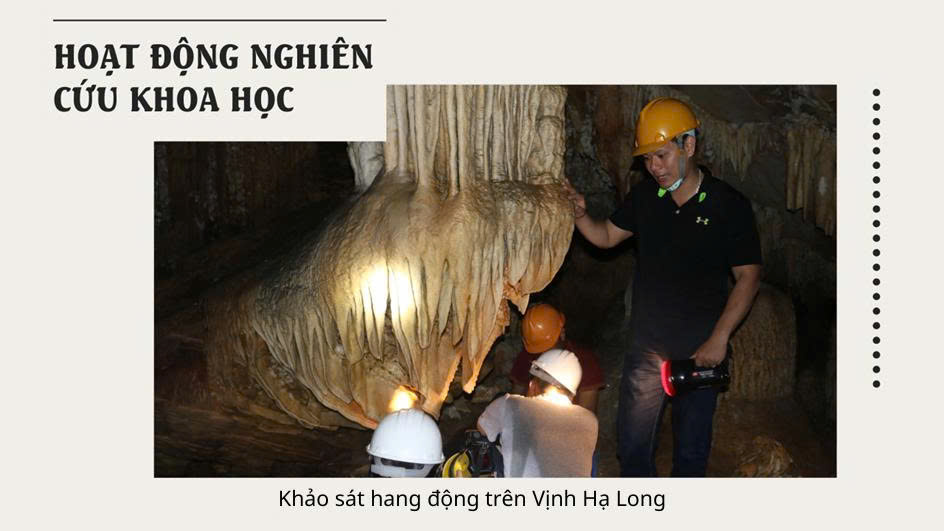
The Hạ Long Bay Management Board has independently conducted research and proactively cooperated with universities, research institutes and scientists, both domestic and international, in developing and implementing nearly 20 scientific research projects on the Bay’s outstanding values. These studies have gradually clarified the multifaceted values of Hạ Long Bay, thereby providing a scientific basis for formulating effective management and conservation solutions, and for supporting the sustainable utilisation and promotion of Heritage values.
Through these research efforts, a number of critical issues have been timely identified and addressed, such as the inspection and early warning of landslide and rockfall risks on islands in areas prone to geological instability. Many pioneering and breakthrough measures, demonstrating a strong commitment to prioritising the integrity of Heritage values and the protection of biodiversity, have been actively proposed and implemented by the Management Board in close coordination with provincial departments and local authorities. These include: the relocation of floating fishing village households from the Bay to the mainland for permanent settlement since 2014, ensuring social security and welfare for local residents; the prohibition of fishing within the strictly protected zones of the Heritage Site since 2018; the development of zoning plans for aquaculture areas located outside the strictly protected zones; the termination of loading and trans-shipment activities of bulk cargo such as clinker, cement and woodchips on the Bay; and the inclusion of the limestone mountain forest ecosystems of Hạ Long Bay, with a total area of over 5,000 hectares, into the system of special-use forests, together with the establishment of a nature reserve for the strict protection of the Bay’s ecosystems.
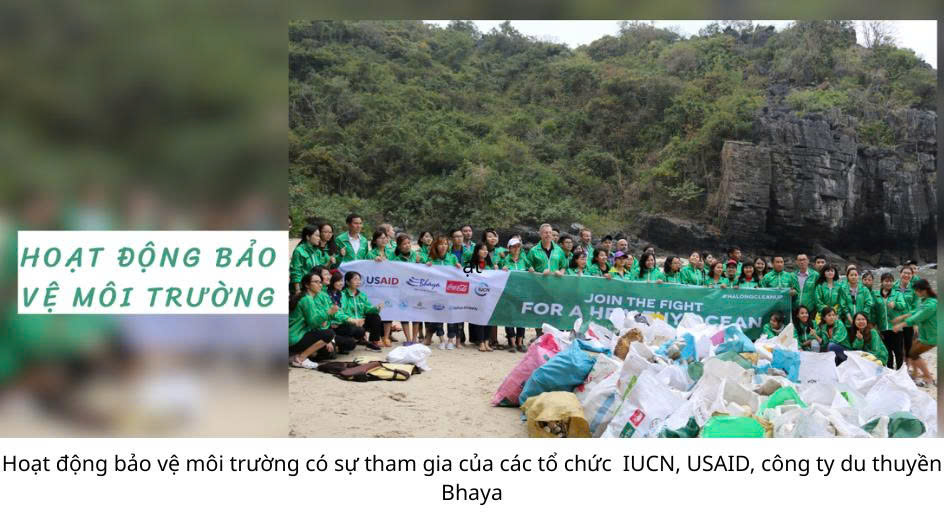
Environmental protection has always been accorded the highest priority in the management of the Heritage Site, with sustained efforts to improve environmental quality in Hạ Long Bay and to achieve new breakthroughs in environmental protection. A number of major environmental projects have been attracted and implemented, notably the Hạ Long Environmental Protection Project funded by JICA, and the project ‘Enhancing Wastewater Treatment Capacity on Đầu Gỗ Island, Hạ Long Bay’ supported by the Government of Japan through the Embassy of Japan in Việt Nam.
Pollution has been controlled at its sources, particularly from coastal and adjacent areas, as well as from coal extraction and transportation activities. Foam buoys have been replaced with durable and environmentally sustainable floating materials at floating facilities on the Bay. The collection and treatment of solid waste and wastewater have also been given strong emphasis, with concentrated investment in manpower and equipment to safeguard the environment of the Heritage Site.
Notably, since 2019, the programme to eliminate single-use plastic waste on Hạ Long Bay has contributed to a reduction of approximately 90 per cent in single-use plastic waste on the Bay. Efforts in communication and public awareness-raising on Heritage protection have been widely disseminated to diverse target groups, including domestic and international pupils and students, coastal communities, visitors, and organisations and individuals engaged in socio-economic activities on the Bay. These actions have been closely integrated with educational, extracurricular and field-based activities relating to the protection of landscapes, the environment and Heritage values.
In particular, Heritage protection education has been formally introduced into schools, and the Ecoboat ecological education model—an innovative extracurricular activity promoting environmental protection on Hạ Long Bay—has been successfully implemented.
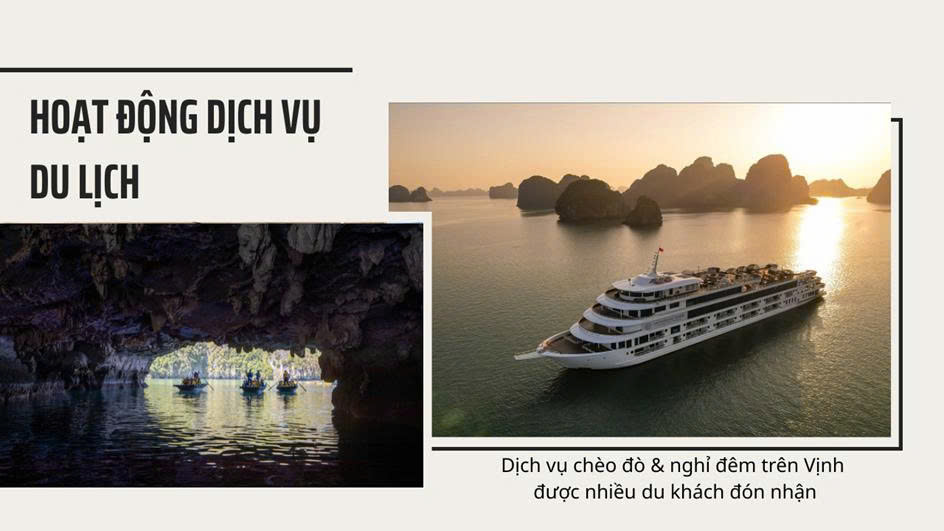
Looking back 30 years ago, tourism services on Hạ Long Bay were limited mainly to scenic boat trips, visits to a small number of caves and beaches, with activities scattered, small-scale and of relatively modest service quality. Today, however, tourism products and services have been increasingly diversified in terms of types, with continuous improvements in service quality and visitor experiences.
Priority has been given to expanding tourism space, extending visitors’ length of stay, and relieving pressure on the core Heritage area through the development of new routes, destinations and tourism products, comprising eight sightseeing itineraries and five clusters and sites for overnight accommodation. Trial cruise exploration activities have been introduced on three dedicated routes; night cruise street products have been developed, offering culinary experiences combined with music performances and night-time coastal sightseeing; and tourism products based on the conservation and promotion of the cultural and historical values of fishing villages, archaeological heritage and biodiversity of Hạ Long Bay have been further expanded.
In parallel, the Management Board has actively coordinated with relevant departments and sectors to advise on the management of tourism service activities on the Bay, including the regulatory framework for tourist vessels, such as the Regulations on the Management of Tourist Boats and the Plan for Enhancing the Quality of the Tourist Vessel Fleet operating in Hạ Long Bay and Bái Tử Long, towards reducing quantity while improving quality, safety and operational efficiency, and strengthening fire prevention and firefighting safety standards for tourist boats.
Resources have been strongly mobilised for investment in the upgrading, restoration and embellishment of infrastructure at sightseeing sites and overnight accommodation locations on Hạ Long Bay, in strict accordance with approved master plans and relevant regulations, with the aim of ensuring safety, enhancing aesthetic quality and improving visitor satisfaction. Priority has been given to the upgrading and improvement of infrastructure at key visiting sites such as Thiên Cung, Đầu Gỗ, Ti Tốp, Mê Cung, Tiên Ông and Ba Hang.
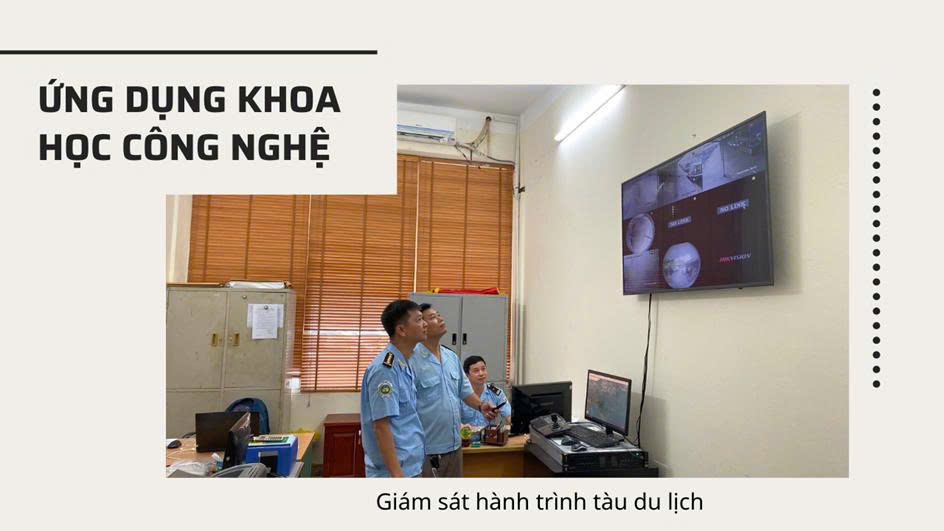
At the same time, strong emphasis has been placed on the application of information technology and the development of technical infrastructure to enhance the effectiveness of Heritage management and tourism service operations. This includes investment in microwave data transmission systems and surveillance camera systems at visiting sites on Hạ Long Bay; the implementation of integrated ticketing for sightseeing and passenger services at cruise ports in line with the transition to electronic invoicing; and the rollout of online ticket sales through Internet banking and QR code payments, thereby diversifying payment methods and providing greater convenience for visitors.
Communication and promotion of Hạ Long Bay have also been actively strengthened through a wide range of channels, including the establishment of dedicated Heritage sections in local newspapers and broadcasting services, the installation of large-scale outdoor advertising panels, the development of a bilingual official website on Hạ Long Bay, and the creation of Facebook pages and fan pages dedicated to the Bay. Dozens of publications have been produced and disseminated. Cooperation with the Club of World Heritage Sites in Việt Nam has been intensified to enhance information exchange and promote the outstanding values and potential of Hạ Long Bay Heritage.
In addition, the Management Board has advised the provincial authorities to maintain close and regular engagement with major international organisations such as the World Heritage Committee, the World Heritage Centre and the International Union for Conservation of Nature (IUCN). Through these partnerships, numerous exchanges and cooperation activities with countries within and beyond the region have been carried out in the fields of economy and culture, particularly in Heritage management and conservation. Many programmes and projects have been supported by international funding, gradually integrating Hạ Long into global initiatives for the protection of World Heritage.
Over the past thirty years, the institutional model for Heritage management has been continuously strengthened and streamlined, with inter-sectoral coordination mechanisms established to enhance effectiveness and to mobilise the active participation of the entire provincial political system in the management, conservation and promotion of the values of Hạ Long Bay.
Acts infringing upon the values of Hạ Long Bay—such as illegal rock breaking, tree cutting, blasting, removal of stalactites, exploitation and trading of corals, and activities causing disorder and insecurity at cave sites—have now largely been brought under control, with the number of violations steadily declining over the years.
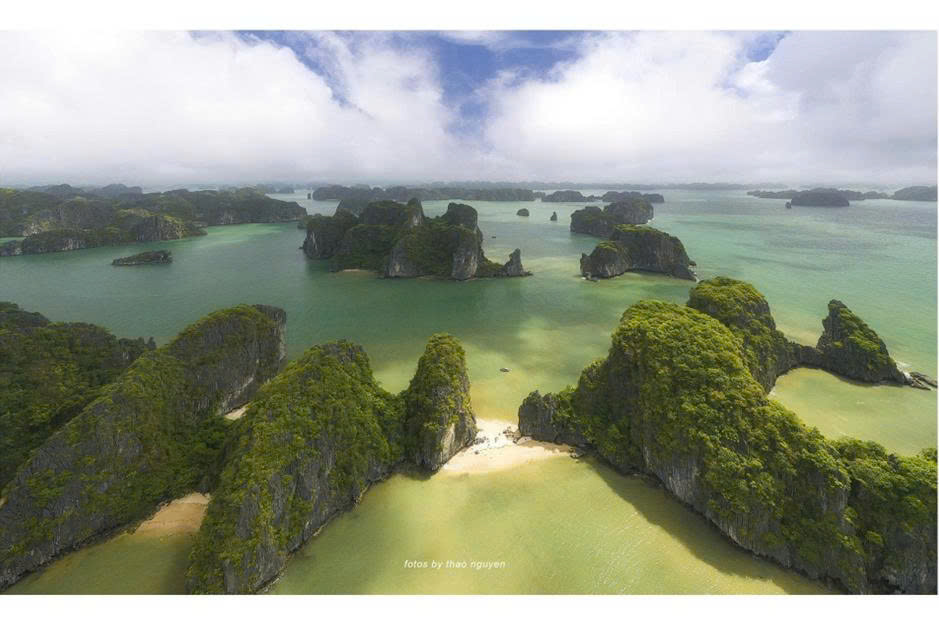
Through these sustained efforts over the past thirty years, Hạ Long Bay as a World Natural Heritage Site has increasingly become an attractive destination for both domestic and international visitors, opening up significant prospects for the socio-economic development of Quảng Ninh Province. Hạ Long Bay has been honoured with numerous prestigious titles, including World Natural Heritage Site, Special National Monument, New Seven Natural Wonders of the World, International Geological Heritage Site of Hạ Long Bay – Cát Bà Archipelago, Leading Tourism Area of Việt Nam, and Leading Tourist Destination of Việt Nam. Over the past three decades, Hạ Long Bay has welcomed more than 60 million visitors, with total revenue from sightseeing fees exceeding VND 9,500 billion.
Alongside these achievements, the management, conservation and promotion of the values of Hạ Long Bay Heritage have also had to confront numerous challenges and difficulties. These include the growing multidimensional pressures on the environment and Heritage values arising from urbanisation and socio-economic activities on and around the Bay; the legal and regulatory framework for Heritage management, conservation and value promotion remaining insufficiently synchronised and specific; and limited awareness of Heritage protection and environmental conservation among certain segments of the community.
As of 10 November 2025, the Hạ Long Bay – Yên Tử World Heritage Management Board was established on the basis of the organisational restructuring of the Hạ Long Bay Management Board, the Bái Tử Long National Park Management Board, and the Management Board of Relics and Scenic Sites under the Department of Culture, Sports and Tourism. The expansion of the Heritage management authority’s mandate to cover key Heritage and monument areas of the Province marked a major shift in management thinking, strengthened inter-regional and inter-local connectivity, and facilitated the formation of new tourism sites, routes and products. This also presents an important opportunity to build and promote the brand of the ‘Hạ Long Bay – Yên Tử World Heritage’ with outstanding global value. Entering a new phase of development, the Hạ Long Bay – Yên Tử World Heritage Management Board continues to pursue strategic orientations focused on accelerating digital transformation, strengthening research and the application of science and technology, promoting green tourism, protecting the environment, and ensuring the sustainable conservation and development of Heritage values.
Compared with the hundreds of millions of years of geological history that have shaped Hạ Long Bay, thirty years represent but a brief moment. Yet, in terms of the establishment and development of a dedicated Heritage management authority, they constitute a remarkable journey marked by numerous significant milestones. Over these three decades, successive generations of officials, civil servants and employees of the Hạ Long Bay Management Board, with dedication, responsibility and commitment, have faithfully upheld their mission to protect, conserve and promote the values of the Heritage. The achievements attained today form a vital foundation for ensuring that the Heritage continues to be safeguarded, enhanced and its values transmitted to future generations./.