


The Enclosed Marine Karst Lake – Open Marine Karst Lagoon System: “A Wonder within a Wonder”
Within Bai Tu Long National Park, part of the Ha Long–Bai Tu Long archipelago, the system of enclosed marine karst lakes and open marine karst lagoons represents a distinctive expression of tropical marine karst geomorphology. Formed through prolonged limestone karstification followed by marine transgression, these features demonstrate the interaction between geological evolution and ecological processes. If Ba Mun forest may be regarded as the “lungs” of the Park, this lake–lagoon system functions as its hidden “pulse,” sustaining unique and semi-isolated habitats within the limestone landscape.
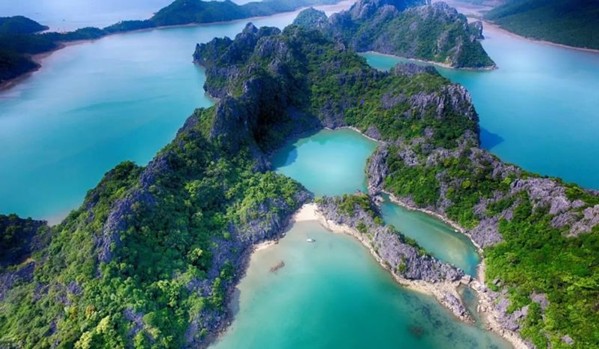
In geomorphological terms, enclosed marine karst lakes are drowned dolines entirely surrounded by limestone cliffs and connected to the sea primarily through submerged caves or narrow fissures. Their limited water exchange creates relatively stable environmental conditions.
Open marine karst lagoons, by contrast, are flooded karst valleys maintaining a more direct connection with the sea, while remaining naturally sheltered by surrounding limestone towers. Both formations are of significant scientific and landscape value, contributing to the integrity of the marine karst environment.
.jpg)
Scientific surveys have demonstrated that these enclosed marine karst lakes and open marine karst lagoons support high levels of biodiversity, including endemic and rare species. Their semi-isolated hydrological regimes provide important breeding and nursery habitats for numerous marine organisms, thereby contributing to the Outstanding Universal Value of the World Heritage property.
Ang Cai Lim exemplifies this ecological and geomorphological convergence. Here, mangrove communities establish within an enclosed marine karst lake — an uncommon occurrence in limestone island settings. Sheltered by steep limestone walls, the waters remain exceptionally calm, forming a characteristic emerald surface. This protected environment supports fish, crustaceans, seabirds and primate species, and provides suitable conditions for carefully managed ecotourism activities such as kayaking.
Similarly, open marine karst lagoons function as semi-sheltered marine basins protected from strong wave action. Mangrove assemblages — including species of Sonneratia, Bruguiera and Rhizophora — develop along their margins, while evergreen forest communities occupy the limestone slopes above. The relatively undisturbed hydrological conditions sustain valuable marine species such as geoduck clams, blue swimming crabs, ark shells and black-lipped pearl oysters. In clear-water areas, coral communities may also develop, further enhancing ecological diversity.
Beyond their biodiversity importance, the system of enclosed marine karst lakes and open marine karst lagoons within Bai Tu Long National Park possesses exceptional aesthetic qualities. The juxtaposition of enclosed waters, vertical limestone cliffs and thriving vegetation creates landscapes of rare harmony and serenity — aptly described as a “wonder within a wonder".
HuyHoang